Newsletter Subscribe
Enter your email address below and subscribe to our newsletter

 Bysonu
The article introduces the 19216872 address format as a single eight-digit ID for local networks, distinct from standard IP notation. It outlines quick login steps for 192.168.72.x devices and flags common problems that can block access. It also emphasizes secure, minimal-exposure practices and future-proofing measures. Readers are left with questions about proper verification, firmware updates, and reliable troubleshooting methods, inviting investigation into the specifics that ensure stable, authorized remote management.
To spot the 19216872 IP address format, one should look for a sequence of eight digits with no separators, typically grouped as a single string rather than the conventional four-octet notation. The focus is IP addressing clarity, enabling quick interpretation.
In router terminology, this aids network scanning and device discovery, facilitating streamlined, freedom-driven assessments without reliance on extraneous details.
Accessing 192.168.72.x routers quickly follows from recognizing the 19216872 format discussed earlier. The quick-login steps emphasize stable access, using standard credentials and a secure, local connection.
Once in, focus on security auditing and firmware management; verify permissions, update firmware, and document changes. Maintain minimal exposure, log actions, and ensure compliance with organizational policy and user autonomy.
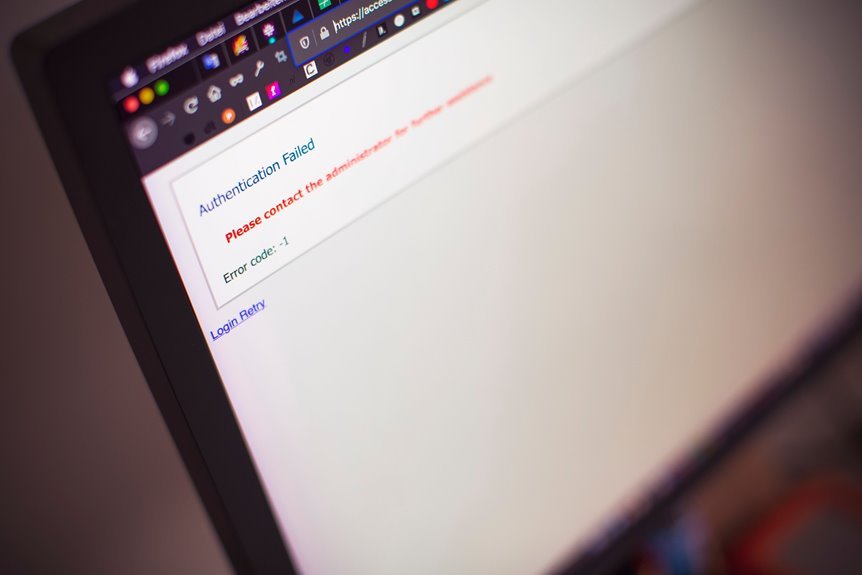
Common login problems for 192.168.72.x routers frequently stem from incorrect credentials, misconfigured network settings, or browser-related issues; identifying the root cause quickly enables targeted fixes.
Symptoms include incorrect password prompts and blocked access.
Verify username, reset password if necessary, and confirm device connectivity.
If access persists, check for a firmware update and apply it to restore stability.
How can users ensure secure, reliable access to 192.168.72.x routers while preparing for future changes? Implement strong, unique credentials and two-factor authentication where available, enforce updated firmware, and monitor access logs.
Establish a minimal attack surface, back up configurations, and use IP discovery to map devices.
Document quick router shortcuts for safe, lasting remote management.
Devices using 192.168.72.x as default IPs are uncommon, typically found in some customized network gear. The note applies to 192.168.72.x security and 192.168.72.x default branding, signaling manufacturer-specific defaults rather than universal standardization.
Yes, it is possible; a subnet change can be implemented. Subnet reconfiguration and IP addressing schemes should be planned carefully to avoid device outages, ensure routing continuity, and preserve access to network resources during the transition.
The device identifies its IP via Identify IP Discovery, typically the router’s default gateway shown in network settings; firmware update timing can influence accessibility. It remains essential for the user to note the exact address for configuration.
Yes, 192.168.72.x can identify both routers and modems depending on the network’s chosen subnet, though devices typically use distinct defaults. Discussion ideas: IP subnet misconceptions, Router vs modem defaults, clarifying boundary between device roles.
Update frequency depends on device and risk, but regularly applying updates mitigates vulnerabilities; without updates, security implications increase. The guidance aligns with choosing a routine, prioritizing critical patches, and balancing convenience with ongoing protection for a freer, empowered user.
In sum, users should recognize the 19216872 format as a compact, internal identifier distinct from standard dotted IPs, and rely on secure, local access for router management. With correct credentials, device connectivity, and current software, administration becomes straightforward and stable. Regular firmware updates, audit logging, and clear change records support ongoing security. If issues arise, verify credentials and browser compatibility, then reattempt. Bottom line: careful access hygiene keeps networks reliable and future-ready, avoiding unnecessary exposure.